
Research prototype
From a sequence to a map and traceable evidence
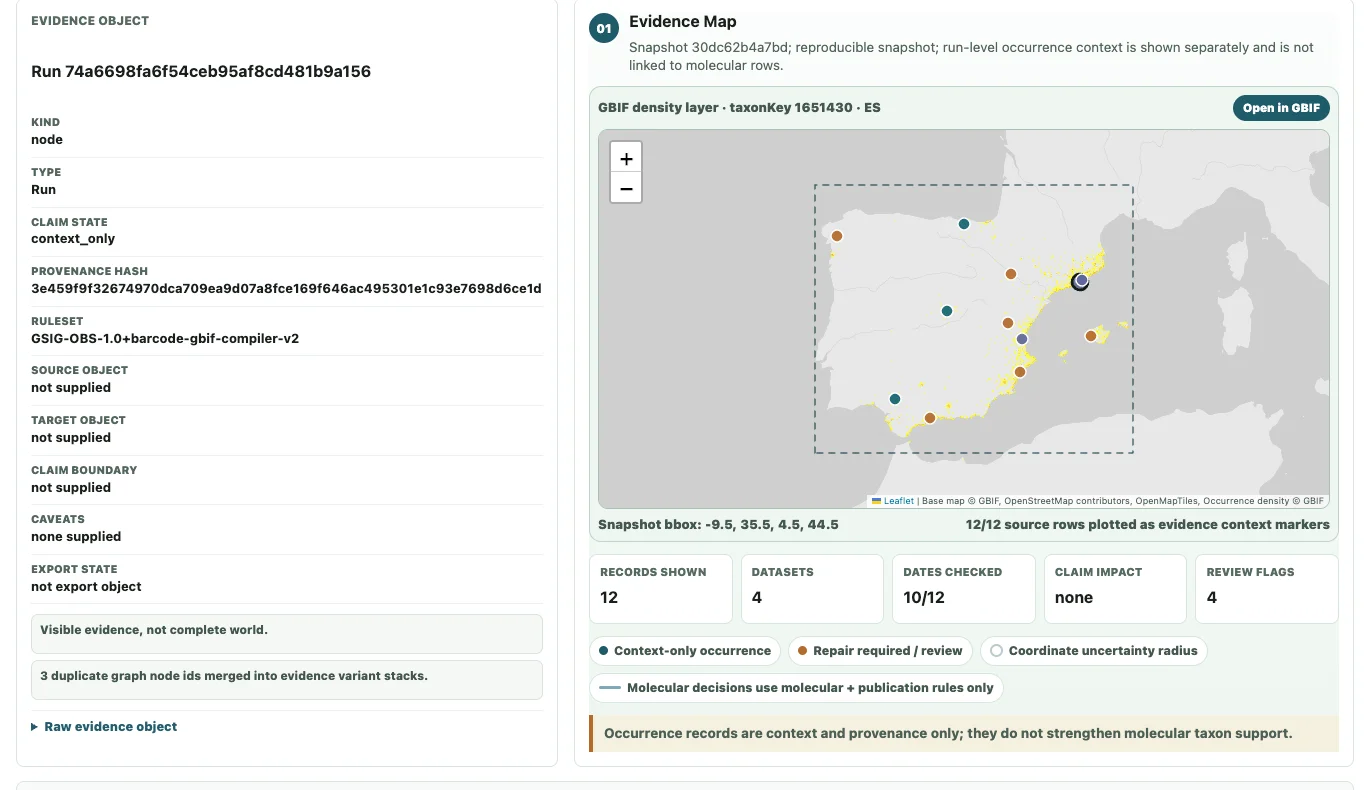
A researcher uploads a sequence or table and explores the result through maps, relationships and source records. Evidence Atlas keeps the path from input to an inspectable, exportable result.
The challenge
Connect a biological sequence to references, taxonomy and geographic observations while keeping the origin of each result traceable. Researchers need a path from an uploaded file to examining matches and exporting material for further work.
My role
Andrey — full-stack development and integrations.
A result you can inspect
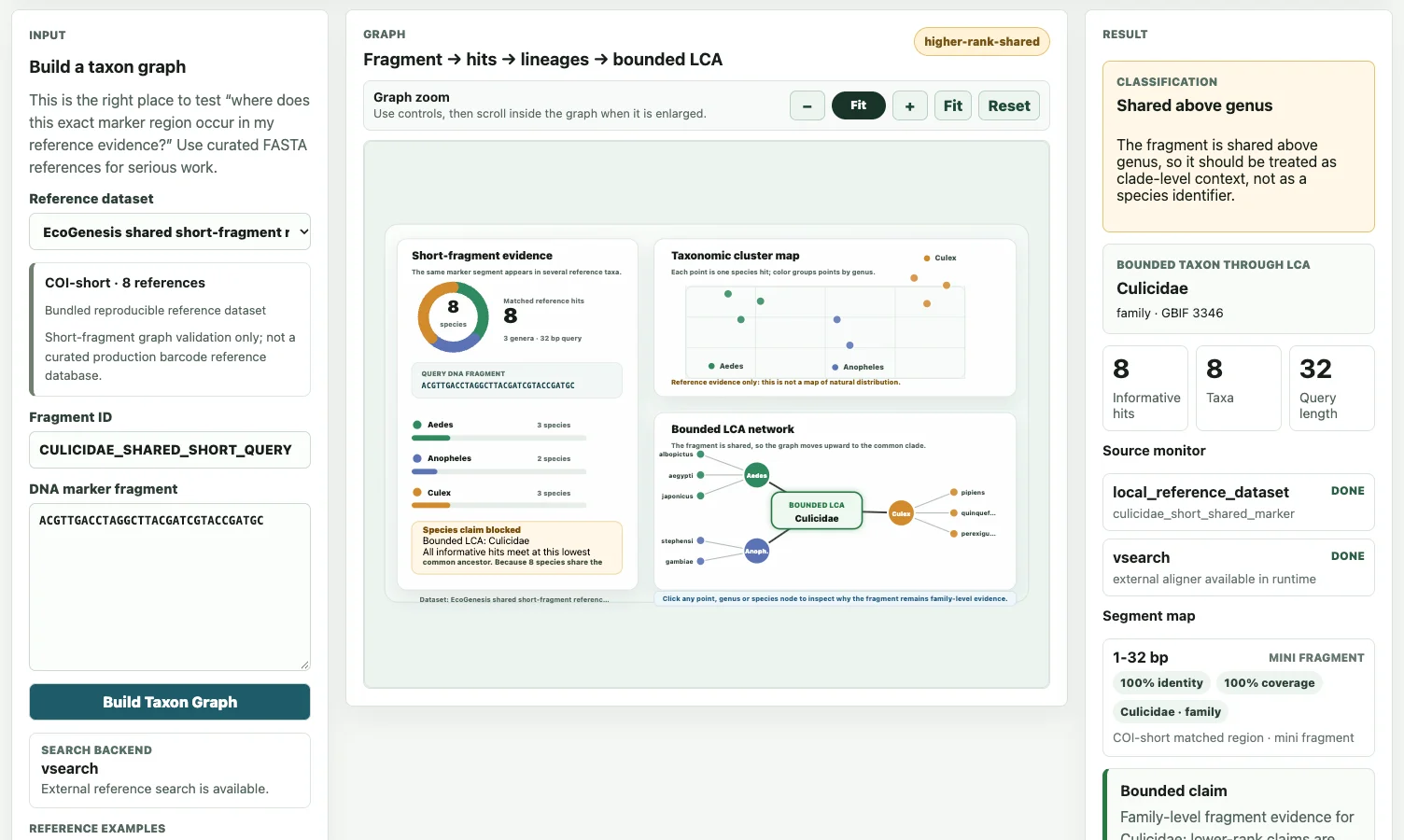
The fragment view connects matched references, a cluster plot and a taxonomic tree. When a sequence is shared across several taxa, the interface shows their common ancestor and explains why a species-level conclusion is not supported.
Following the data from file to result
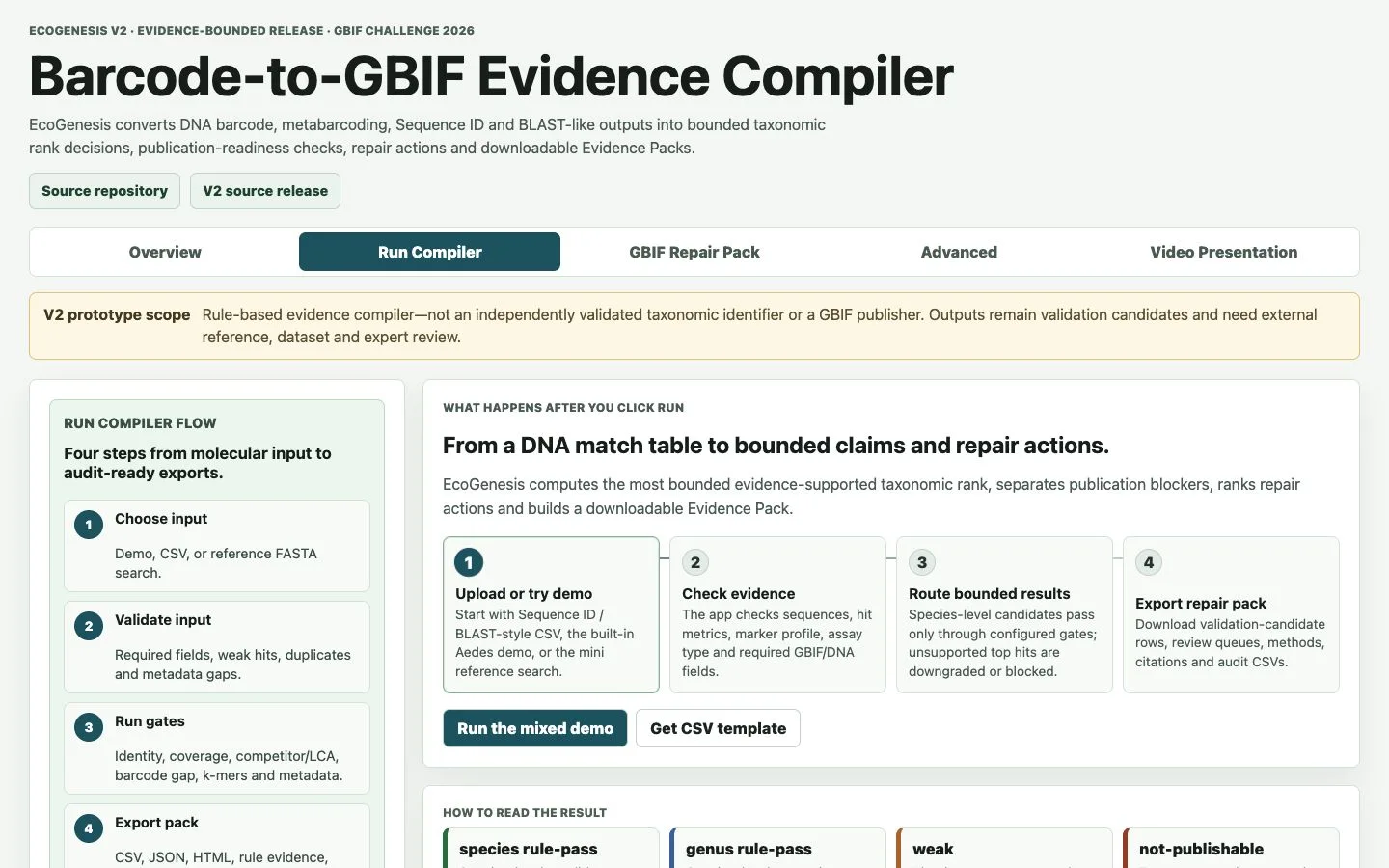
Import, validation, rule-based checks and export form one workflow. Source references and review states remain attached to the result so the next person can understand how it was produced.
The outcome
Evidence Atlas brings the research journey into one interface: a sequence, reference matches, a map, taxonomic relationships and export. Users can inspect not only a match, but also the result’s uncertainty, the basis of its classification and the records behind it.
