
Live platform
Explore living things, from organism to anatomy
One organism becomes the starting point for an investigation: its place in the living world, internal structure, geography and scientific sources. EcoGenesis connects these perspectives with learning paths. Readers can begin with an accessible description, then move into anatomy, maps and molecular relationships.

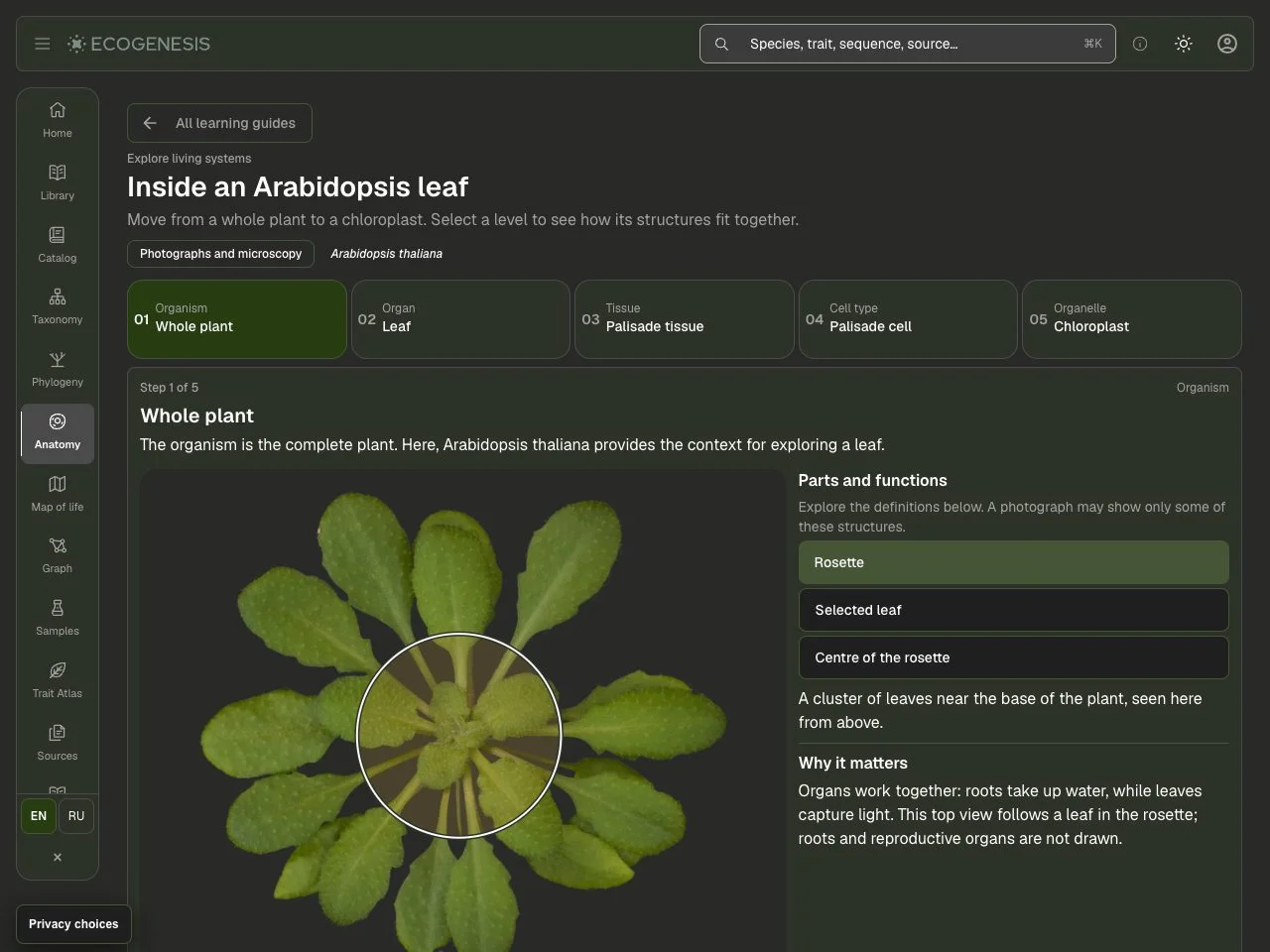
The challenge
Help people understand life through its connections: where an organism occurs, how it is structured and what scientific sources tell us about it. Bring reading, visual exploration and learning together so that moving into a more complex topic remains approachable.
Team
Team designer — visual design. Andrey — full-stack development and integrations.
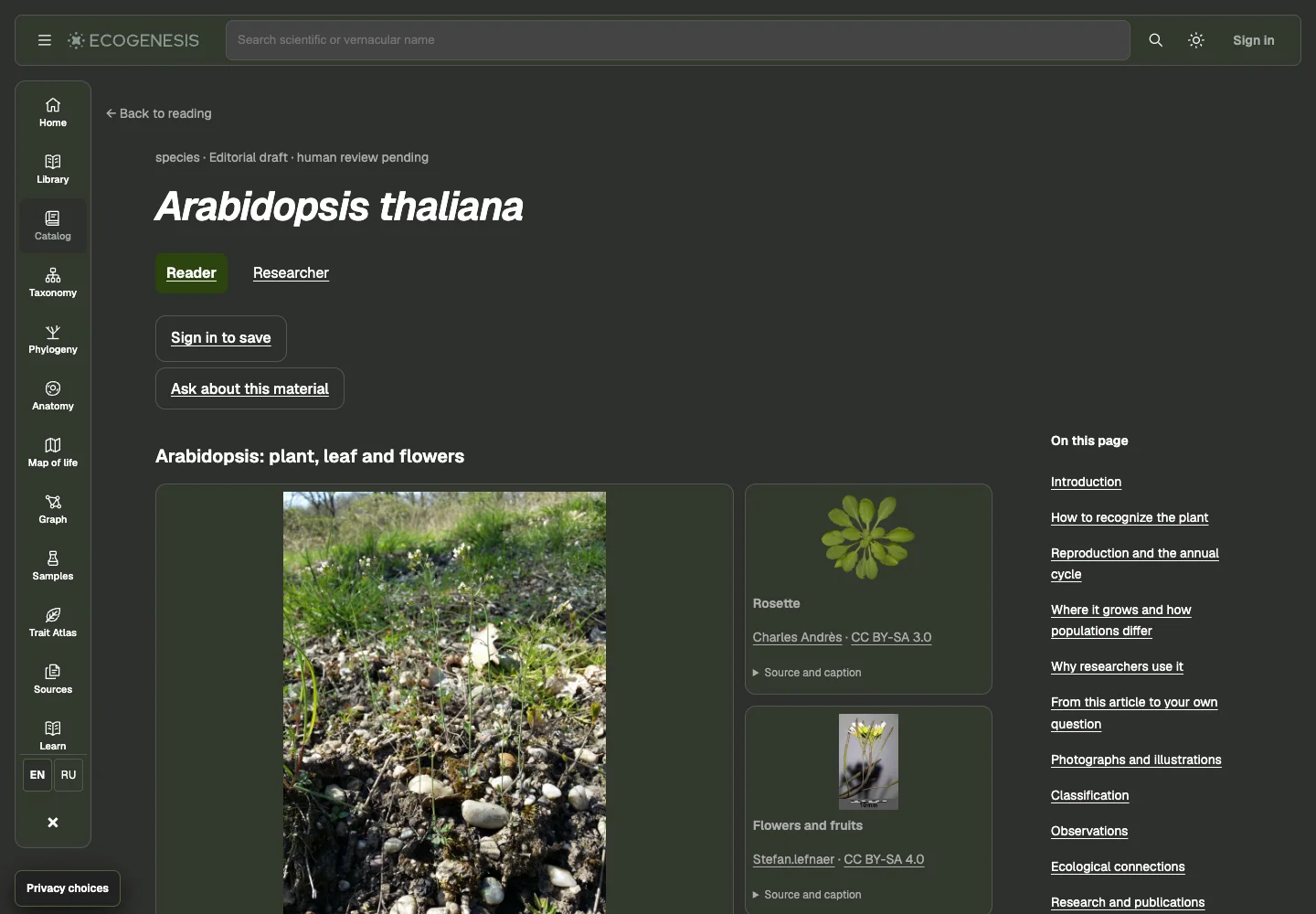
Read with context
An organism page connects its description with images, classification and source-backed material. Reader and researcher modes offer different levels of detail.
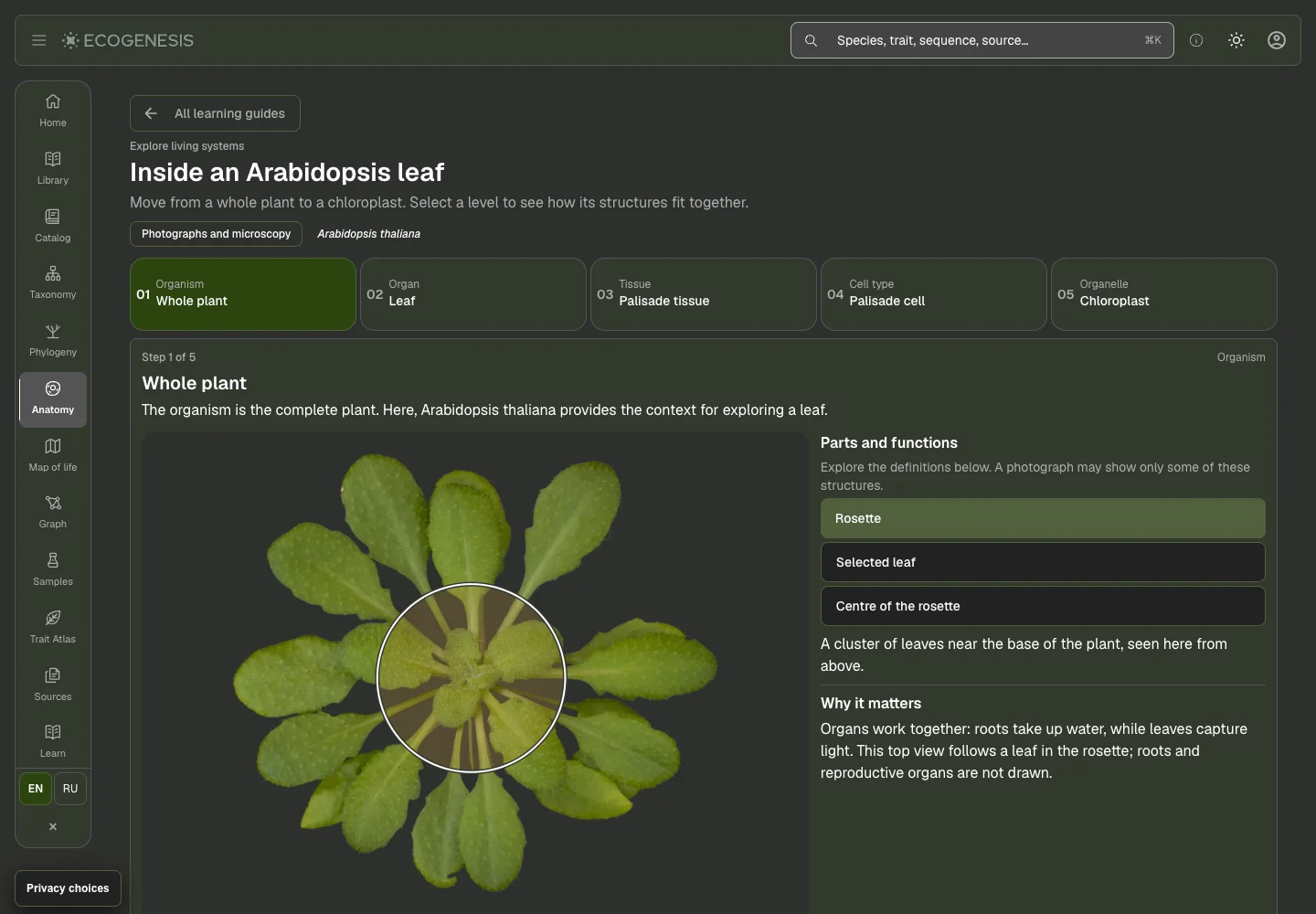
Explore through interaction
The anatomy interface lets a user move between biological scales and inspect structures. Definitions, visual selection and source references work together in one screen.
The outcome
EcoGenesis combines an encyclopedia of life with tools for independent study. An organism page leads into classification, anatomy, geographic context and sources. Learning paths give study a sequence, while research views provide a way to explore relationships between data in greater depth.
Several ways into the same subject
The encyclopedia, visual tools and learning activities form a connected journey. Sources remain alongside the material at each level.
An organism in context
Search, classification, related reading and an observation map connect a name to a species’ place in nature.
From structure to function
Interactive anatomy and molecular views let users explore different scales and inspect records of genes, proteins and their relationships.
Follow a learning path
Topic-based paths connect reading, exercises, sources and saved progress. Learners can see the next step and revisit earlier material.