
Game in development · scene and interface design
Genesis Laboratory: learn through investigation
Players examine a specimen, choose instruments and record observations before drawing a conclusion. Andrey develops the learning game as a whole: investigation, laboratory space, objects, interface and Unreal implementation.
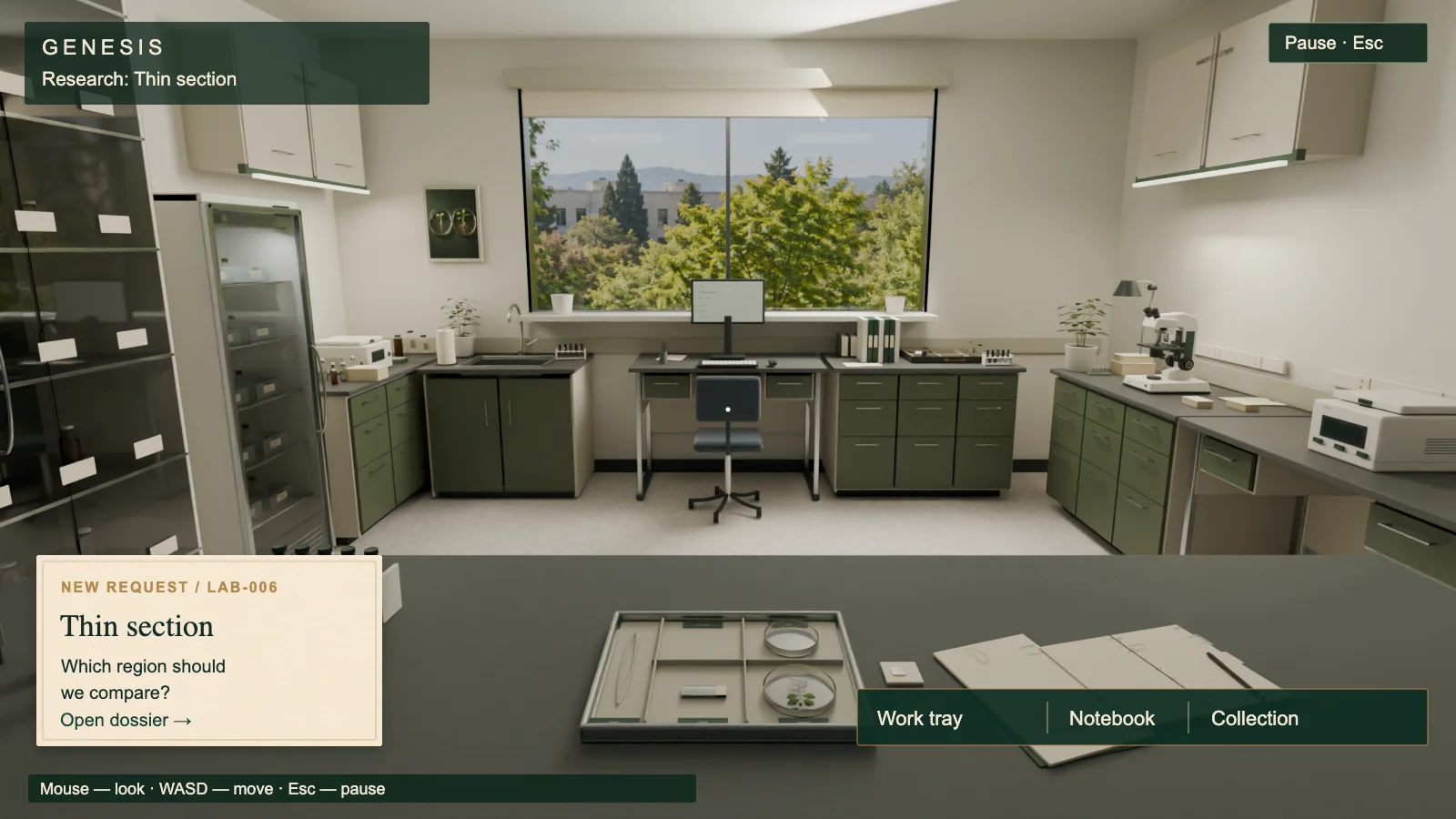
The challenge
Let players experience a scientific investigation: receive a task, choose a specimen and instrument, make an observation, record the result and justify a conclusion. The learning design centres on understanding when the evidence supports an answer and when further investigation is needed.
My role
Andrey — concept, learning and game design, 3D scene assembly, interfaces and technical development.
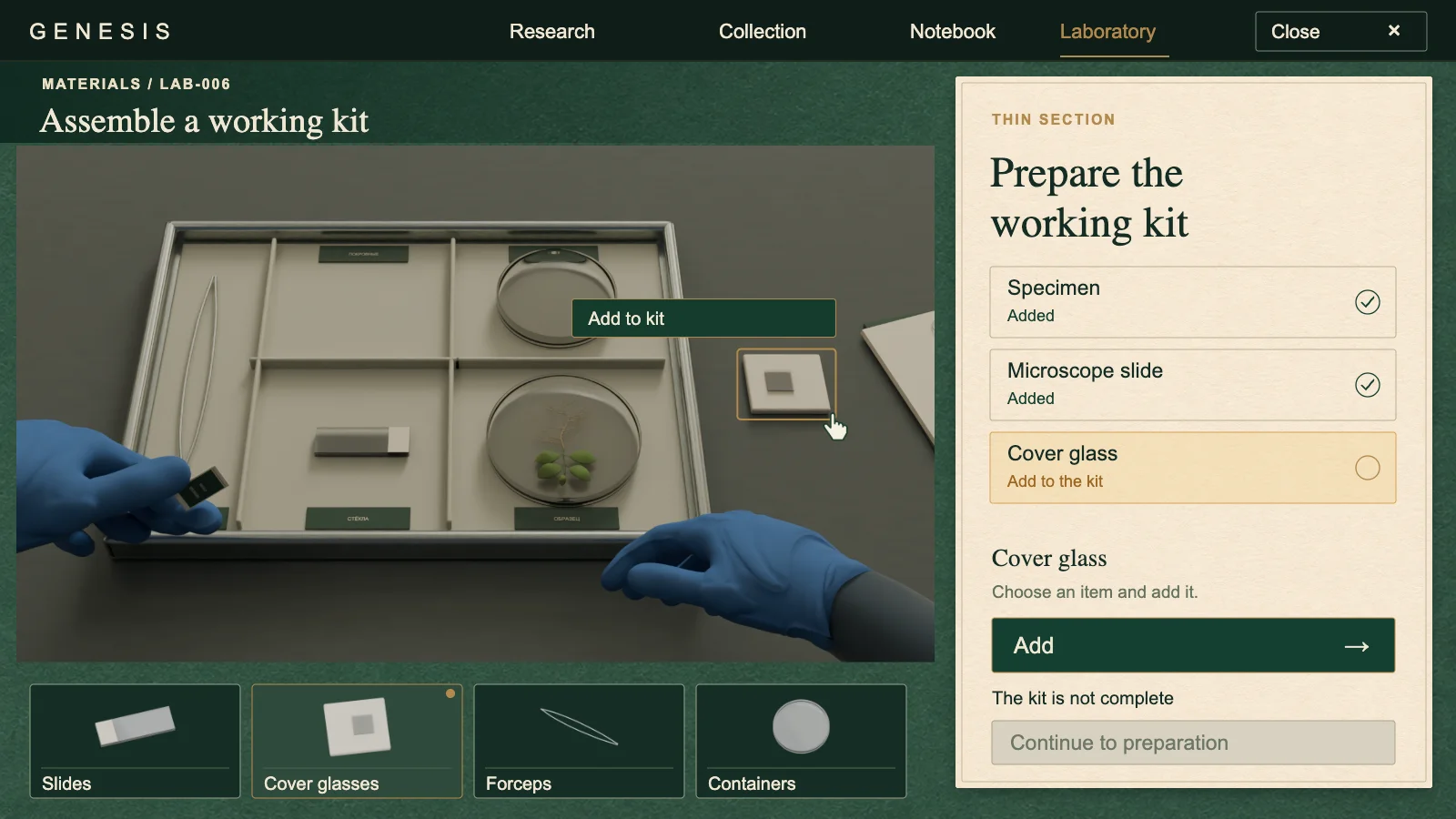
Work with the specimen
The physical tray brings the specimen, tools and sequence of actions into one focused workspace. The checklist makes the current step and what remains visible.
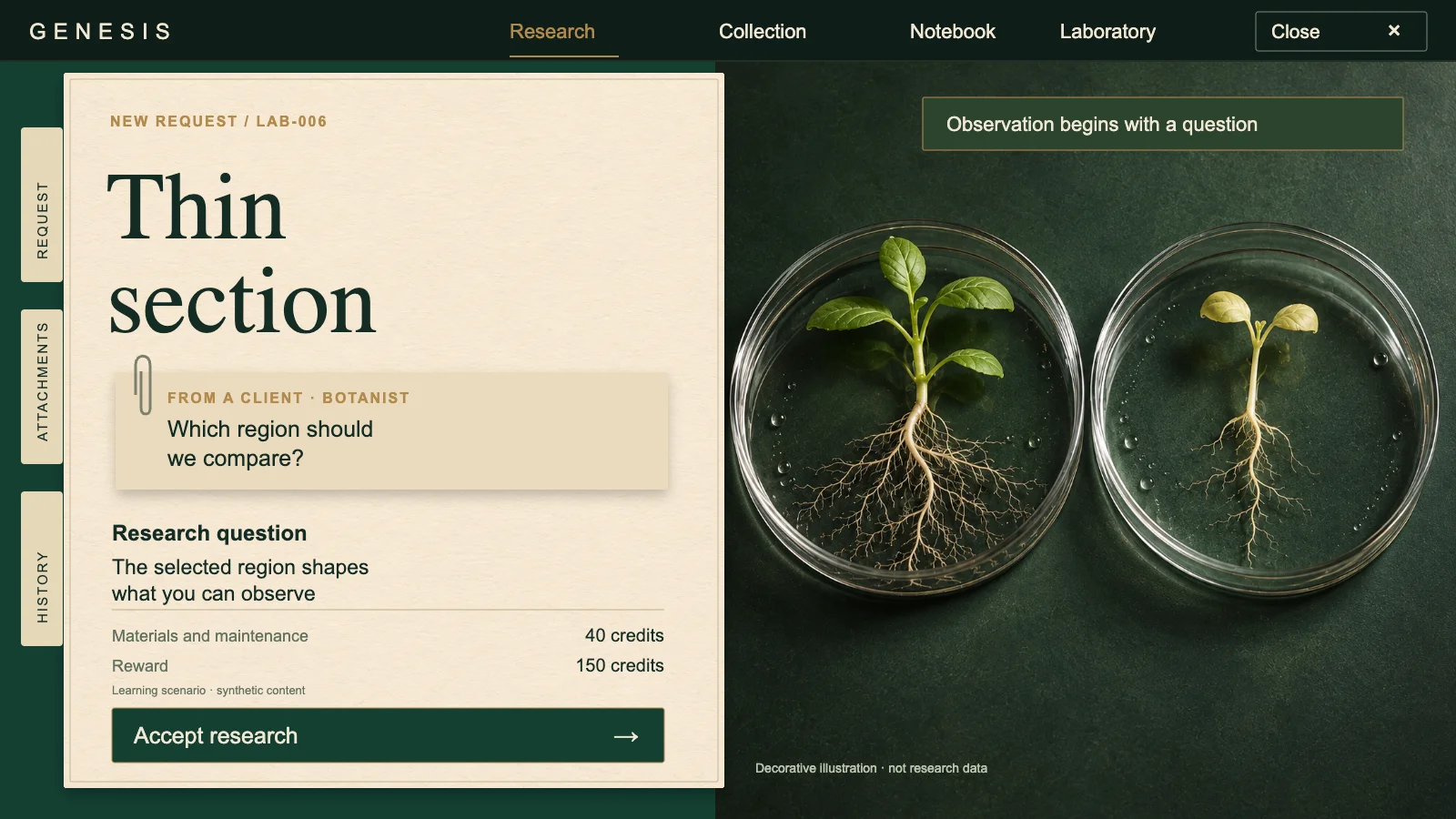
Give each specimen context
A dossier combines specimen images, its learning context and the observation task. Paper-like surfaces and objects in the scene connect the dossier to the laboratory setting.
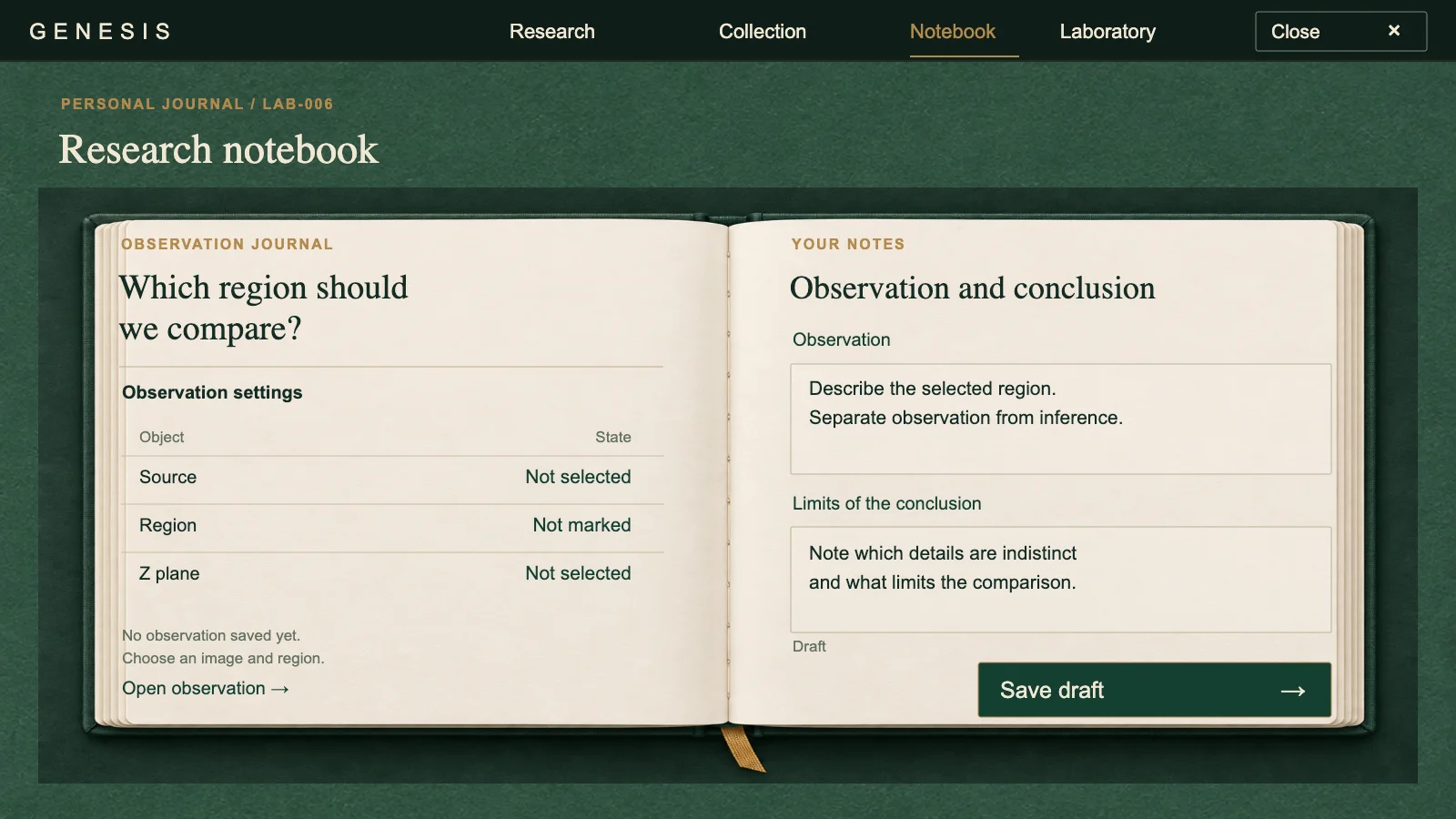
Recording observations and looking for explanations
The notebook is designed with space for observations and their interpretation. Players will be able to return to their notes and see how an investigation developed.
The outcome
GENESIS Laboratory turns the scientific method into a sequence of player decisions. A dossier gives the specimen context, an instrument produces an observation, and the notebook and report connect results to conclusions. The laboratory space supports this process through its objects and interface.
From a learning goal to a game
The objects, information and actions belong to the same investigation.
Design the investigation
Define what the player needs to notice, which actions reveal evidence and how observations support an explanation.
Build a coherent space
A 3D room, tools, specimens and readable interfaces make the workflow visible through the environment.
Examine the basis of a conclusion
In the learning design, a result depends on observations, controls and sample sufficiency. The notebook and report retain the investigation so players can explain their decision and revisit it.
Original learning-game project by Andrey.